
India has joined over 100 countries and global organizations in condemning Israel's "unilateral" decisions and measures aimed at expanding its "unlawful presence" in the West Bank.

Indian benchmark indices, Sensex and Nifty, extended their losses for a second consecutive day, primarily due to HDFC Bank's disappointing quarterly earnings and escalating tensions in West Asia, coupled with persistent foreign fund outflows.

Indian benchmark indices, Sensex and Nifty, saw declines in early trade, influenced by rising crude oil prices and ongoing geopolitical tensions in West Asia. Experts suggest that crude oil remains a primary concern, with Brent holding near USD 88 a barrel due to renewed US warnings against Iran, embedding a geopolitical risk premium in energy markets. Track Sensex, Nifty

Gold and silver prices are anticipated to maintain a positive trajectory in the coming week, with market volatility expected to remain high due to ongoing developments in West Asia and upcoming global economic data, particularly the Federal Reserve's FOMC meeting minutes.

Indian banks and non-banking financial companies (NBFCs) are undertaking a comprehensive review and reset of their engagement terms with fintech firms, driven by the Reserve Bank of India's (RBI) draft Guidance on Regulatory Expectations for Data Governance and the stringent compliance requirements of the Digital Personal Data Protection (DPDP) Act, 2023, and its 2025 Rules.
Indian benchmark indices, Sensex and Nifty, continued their downward trend for the fifth consecutive day, with the Sensex dropping 281 points and Nifty falling 78 points, primarily driven by surging crude oil prices and persistent geopolitical tensions in West Asia.

Analysts predict that the Reserve Bank of India's interest rate decision, the evolving situation in West Asia involving the US-Iran conflict, and crude oil prices will be the primary factors influencing investor sentiment in the Indian stock market this week.

Moody's Ratings has highlighted that Indian banks are among the most exposed in the Asia-Pacific region to the West Asia crisis, primarily due to India's high dependence on energy imports, which could lead to increased inflation, higher interest rates, and strained borrower cash flows.

Analysts predict that crude oil prices, geopolitical tensions in West Asia, and upcoming inflation data will be the primary drivers of the Indian stock market this week, alongside foreign investor activity and domestic quarterly earnings.

Indian stock markets this week will be primarily influenced by a series of corporate Q1 earnings, the evolving geopolitical situation in West Asia, and fluctuations in crude oil prices, according to market analysts.

Indian benchmark indices, Sensex and Nifty, recorded their fifth consecutive day of losses, driven by investor caution over rising oil prices due to West Asia tensions and renewed concerns regarding US trade tariffs.

Indian benchmark indices Sensex and Nifty extended their losses for the fourth consecutive session, with the Sensex declining 363.66 points and the Nifty dipping 126.65 points, primarily due to a sharp jump in Brent crude oil prices to USD 98.32 per barrel amid escalating tensions in West Asia.

India's foreign exchange reserves have surged by $12.42 billion, reaching a new all-time high of $729.33 billion for the week ended August 21, driven by increases in foreign currency assets and gold reserves.

Indian benchmark indices Sensex and Nifty saw a significant rebound in early trade, driven by a sharp decline in crude oil prices and easing geopolitical tensions in the West Asia, which improved market sentiment and reduced inflation fears. Track Sensex, Nifty on July 27.
Indian benchmark indices Sensex and Nifty experienced a significant slump in early trade, driven by escalating tensions in West Asia and a sharp rise in crude oil prices, alongside a bearish trend in other Asian markets.

Indian benchmark indices, Sensex and Nifty, experienced a significant downturn as escalating tensions in West Asia led to a sharp surge in crude oil prices, coupled with fresh foreign fund outflows and a weakening rupee.

ICICI Bank has successfully raised $1 billion through a five-year senior unsecured US dollar bond, marking its first public dollar bond issuance since 2017 and the largest single-tranche US dollar bond issuance by an Indian issuer so far this year.

The Reserve Bank of India (RBI) net bought $561 million in June, marking its first net purchase since February, following three consecutive months of net sales. This move coincided with a series of government and RBI measures to attract foreign capital, leading to a 0.36 per cent appreciation of the rupee against the dollar.

Ten Indian construction workers were rescued from a West Bank village where they had been held for over a month after being stripped of their passports. Palestinians lured the workers to the village with the promise of work and then took their passports and tried to use them to cross into Israel. The workers were rescued in an overnight operation led by the Israeli Population and Immigration Authority, the IDF, and the Justice Ministry. They have been transferred to a safe location until their employment status is determined.

India's remittance inflows have remained robust despite the West Asia conflict, driven by precautionary transfers and diversification of remittance sources, with bankers expecting continued stability for the year.

Indian benchmark indices Sensex and Nifty closed largely flat on Monday, recovering from early losses, as escalating tensions in West Asia and a sharp rally in crude oil prices weighed on investor sentiment, despite resilience in IT and consumer durables stocks.

The Calcutta High Court has appointed a retired judge as a special officer to manage the day-to-day expenses of the Mamata Banerjee-aligned Trinamool Congress (TMC) from three debit-frozen bank accounts. The accounts were frozen following a complaint by a rival TMC faction alleging they held proceeds of crime. The court allowed transactions for party expenses and legal costs, noting that the initial freezing lacked specific material basis and that the complainant had previously benefited from these accounts.

Axis Bank has opened 50 new branches across India, while Abakkus Mutual Fund has surpassed Rs 10,000 crore in AUM. YES Bank launched a new credit card for women, and J&K Bank partnered with HDFC Life to enhance its insurance offerings, showcasing significant growth and strategic developments in the Indian financial sector.

'India was the emirate's largest international source market by hotel guest volume.'

'India is vulnerable to the West Asia crisis in three ways: Energy costs, the business Indian companies conduct in the region, and remittances from the Indian diaspora.'

Ahmedabad Cyber Crime Branch has uncovered a Rs 1.5 crore WhatsApp fraud, leading to the arrest of two key SIM and OTP suppliers in West Bengal. The investigation revealed a sophisticated international cybercrime network spanning China, Pakistan, India, and Hong Kong, operating a "boss scam" and utilizing a "Cybercrime as a Service" model. Police recovered a significant portion of the defrauded amount and secured thousands of devices.

Indian companies' overseas expansion plans are holding strong despite geopolitical tensions in West Asia, driven by structural factors like supply-chain diversification, free trade agreements, and market expansion, according to Ajay Sharma, managing director and head of banking at HSBC India.

Indian listed companies experienced their fastest revenue growth in 15 quarters during Q1FY27, with combined net sales rising 18.4% year-on-year, while net profit grew 16%, primarily driven by mining, metals, and banking sectors, despite a contraction in operating margins due to higher input costs.

The Enforcement Directorate has frozen bank deposits of the Trinamool Congress worth Rs 440 crore under the anti-money laundering law. This action follows searches in a funds misappropriation case, with allegations of significant transfers to a private aviation company and the purchase of luxury aircraft.

A stolen mobile phone belonging to an 88-year-old man has helped the Delhi police unearth an interstate cyber-fraud syndicate allegedly operating through a three-stage network spread across Rajasthan and Uttar Pradesh, an officer said on Monday.
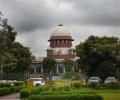
The Supreme Court has listed for hearing on August 31 an appeal of Sumit Roy, personal assistant to Trinamool Congress MP Abhishek Banerjee, challenging the August 6 order of the Calcutta high court denying him pre-arrest bail in the Salboni land-grabbing case.

India's foreign exchange reserves saw one of their largest weekly expansions, surging by USD 14.136 billion to reach USD 707.002 billion during the week ended August 7, according to the Reserve Bank of India.

India has removed a key regulatory hurdle, allowing exporters to receive payments in Indian currency while retaining incentives under the country's foreign trade policy, a move aimed at promoting wider use of the rupee in international trade.
Indian benchmark indices Sensex and Nifty experienced declines in early trade, driven by a surge in Brent crude oil prices above USD 91 per barrel due to escalating tensions between Iran and the US, alongside an increase in US 10-year bond yields. Track Sensex, Nifty on August 18.

Lack of women in Karnataka's new council of ministers has put the spotlight once again on women's under-representation in politics and policy.

State-owned Bank of Baroda (BoB) has agreed to pay $600 million (about 5,700 crore) to settle litigation arising from the collapse of NMC Health, ending years of cross-border legal proceedings.

India's wholesale price index (WPI) inflation marginally eased to 9.78 per cent in July 2026, down from 9.87 per cent in June, primarily due to a cooling in the prices of fuel, power, and food items, marking the first month-on-month drop under the new 2022-23 base year.

England midfielder Morgan Rogers is an ideal signing for Chelsea and could form an exciting partnership with midfielder Cole Palmer, new manager Xabi Alonso said on Monday.

West Bengal Chief Minister Suvendu Adhikari announced that the first phase of fund transfers under the 'Annapurna Yojana' will begin on June 3, with eligible women beneficiaries receiving Rs 3,000 directly in their bank accounts.
Indian benchmark indices, Sensex and Nifty, experienced significant declines, with the Sensex falling 493 points and the Nifty dropping for the sixth consecutive day, primarily due to elevated crude oil prices reaching USD 91 per barrel and diminishing hopes for a diplomatic resolution in West Asia.
